Public Events
パブリックイベント
- TOP
- Public Events
- INSIGHTS: CUBA
INSIGHTS: CUBA
4.14 Sun.
16:30—17:00 Rene Peña
17:30—18:00 Alejandro González
y gion
[ESP / JP]
Free
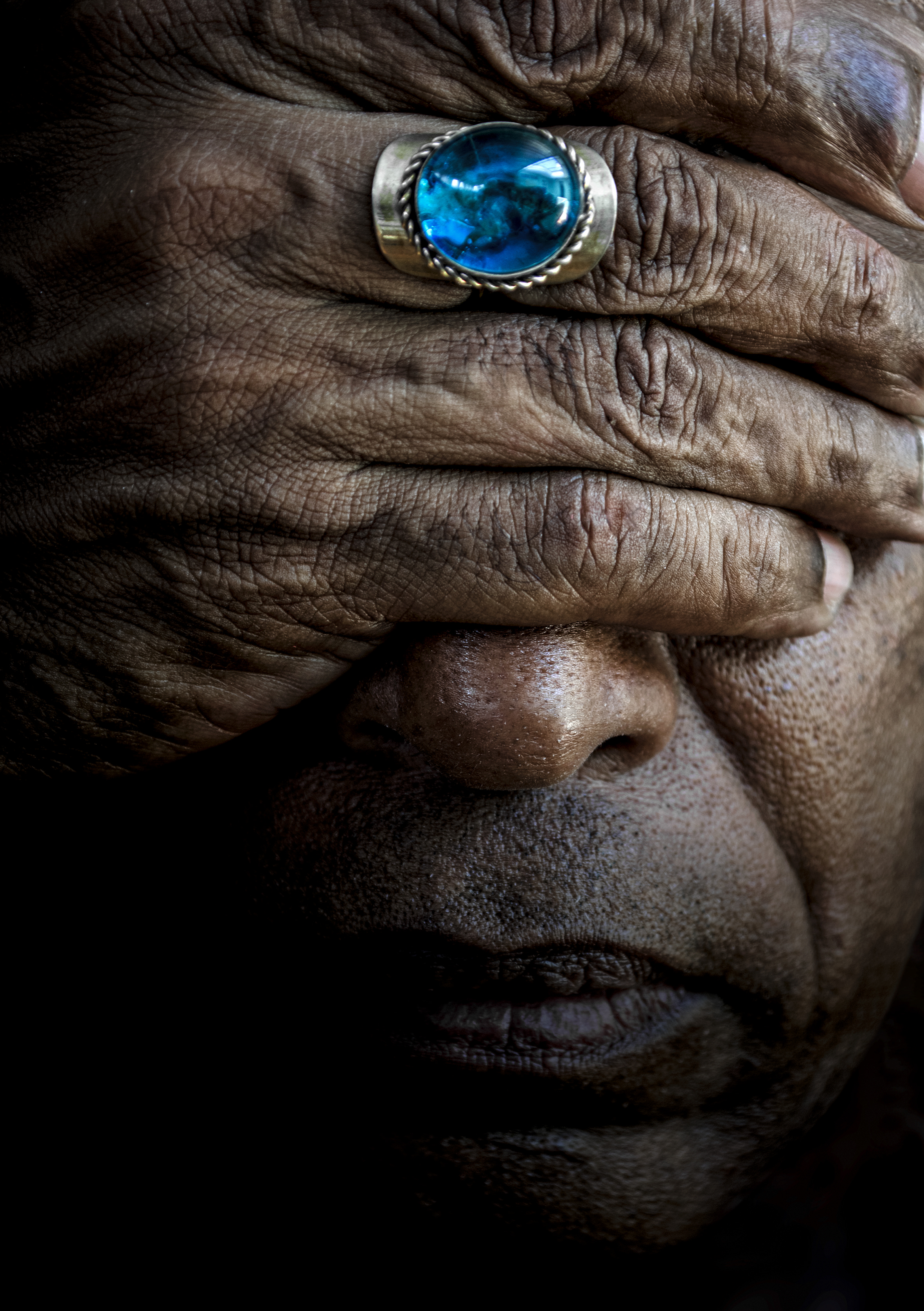
René Peña, S-T / Untitled, 2018
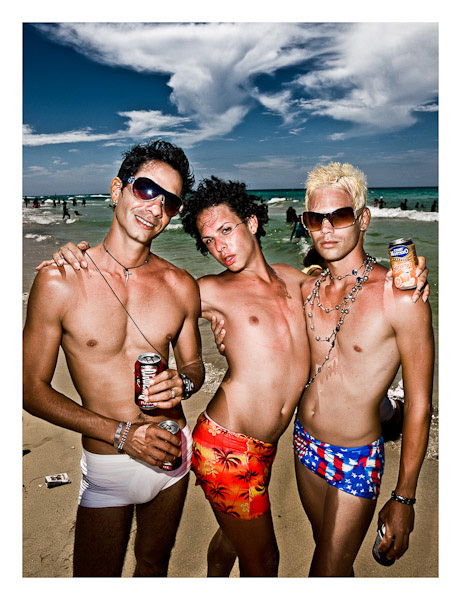
Alejandro González, From the Series Conducta impropia. Mi Cayito, Havana, 2008
Please join Rene Peña and Alejandro González for a short introduction to their practice and approach. In two short back to back sessions each photographer will individually introduce their practice with a quick slide projection and commentary. This event allows visitors the opportunity to get to know more about these photographers and their unique approach.
All art that calls itself Cuban, whether or not made in Cuba, bears the seal of the country’s history and the existential drama of its inhabitants. Its creators have not succeeded in resisting the need to issue judgment on that history or simply identify themselves in it. It is an unavoidable art-life-society interconnection. About Her, about Me, and about Them is a way of thinking about part of that recent history through photography.
About Her, about Me, and about Them is an unfinished trilogy about a country under permanent construction.
All art that calls itself Cuban, whether or not made in Cuba, bears the seal of the country’s history and the existential drama of its inhabitants. Its creators have not succeeded in resisting the need to issue judgment on that history or simply identify themselves in it. It is an unavoidable art-life-society interconnection. About Her, about Me, and about Them is a way of thinking about part of that recent history through photography.
About Her, about Me, and about Them is an unfinished trilogy about a country under permanent construction.
- Please Note:
- * This is a free event but booking is required.
* Please arrive at least 10min before the event starts to avoid disappointment.
* 5min before the event start we will fill the remaining seats.
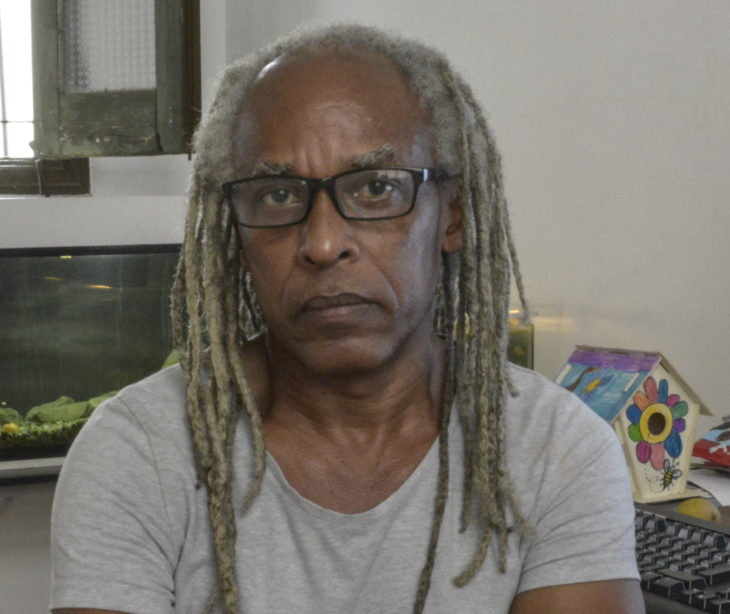 ©René Peña
- René Peña
- René Peña (La Habana, 1957) emerged in the Cuban photographic scene in the late 1980s, old enough to recall the revolutionary epic but not to feel it as his own. His generation was destined to live through the collapse of the geographical cartography of international socialism. Peña was born in a time of utopia and lived through the years that led to its dissolution. Those were years in which artists’ themes and the objects of their research changed from the collective to the personal, and the role of the individual gained risky prominence. The language of art changed as well, becoming enriched with the interconnection of artistic disciplines – the installed space, the performative act, and the ephemeral gesture joining the collectable object – and overflowing previous classifying barriers. René Peña’s generation became sarcastic, and issued critical judgment through simulation. Each of the scenes constructed by Peña to date is a structure of the thoughts contained in his own body. This is not, as some have defined it, a form of transvestism, but the construction of a stage – his body – where the different acts of the history he was destined to live are represented. Independent of his own will, Peña acts as a highly social individual – literally, a body – repeatedly marked by the material circumstances, the arbitrariness, the double moral, the intolerance, the loss of values, the gender conflicts, and the social inequalities of his country’s recent past.
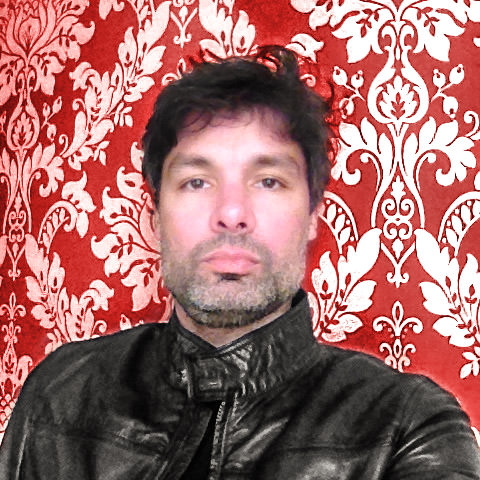 ©Alejandro González
- Alejandro González
- Alejandro González (La Habana, 1974) was born when everything still seemed to indicate that a better future was possible. He grew up waiting for that promised future. His photos explore the empty spaces of untold stories or social segments that were not represented in the official photography. Capturing events and people not considered eligible by the powerful, the artist unveils historical gaps avoided by power. Using actors and reconstructing scenarios, he photographs truths that were concealed from us. Each of his series, generically entitled Re-construcción (Re-constructions) is the result of rigorous historical research, and simulation makes them no less credible. González has studied the mega projects (many of them unsuccessful) contained in the Revolution’s economic development plans of those decades, as well as the essential moments that marked the radical course of social policy and ideology. He has constructed models employing recycled materials in order to “repeat,” but from a critical point of view, photos that originally documented important political events of the country. His photographs weaken the political ritual, use irony to expose the economic fantasies, unveil the ruins, make evident the rhetoric and the demagogy, and point out the mistakes. He can do this from the distance granted to him by virtue of his not being a witness of the events. That enables him to tell us about “them” from a perspective we feel is closer to objectivity.
- y gion
- 19, Benzaiten-cho, Higashiyama-ku, Kyoto, 650-0086
Subway Tozai Line “Sanjo Keihan” station / Keihan Line “Sanjo” / “Gion Shijo” station. 5 min on foot from exit 2 (Sanjo Keihan / Sanjo) / 9 (Gion Shijo)